
Dental Sealants in Overland Park

Key Takeaway
Dental sealants are thin coatings applied to the chewing surfaces of molars to protect them from decay. They are especially recommended for children and adolescents as a preventive measure to reduce the risk of tooth decay in hard-to-reach areas.
What Are Dental Sealants?
Dental sealants are thin protective coatings applied to the chewing surfaces of molars. They are typically made from durable resin-based materials that bond directly to the enamel and create a smooth barrier over the deep grooves and pits in back teeth.
These grooves can easily trap food particles and bacteria, especially in children who are still developing brushing habits. By sealing these areas, dental sealants help reduce the risk of cavities and make the teeth easier to keep clean. Sealants are commonly recommended for both permanent molars and, in some cases, baby teeth that are at higher risk for decay.
The Importance of Dental Sealants
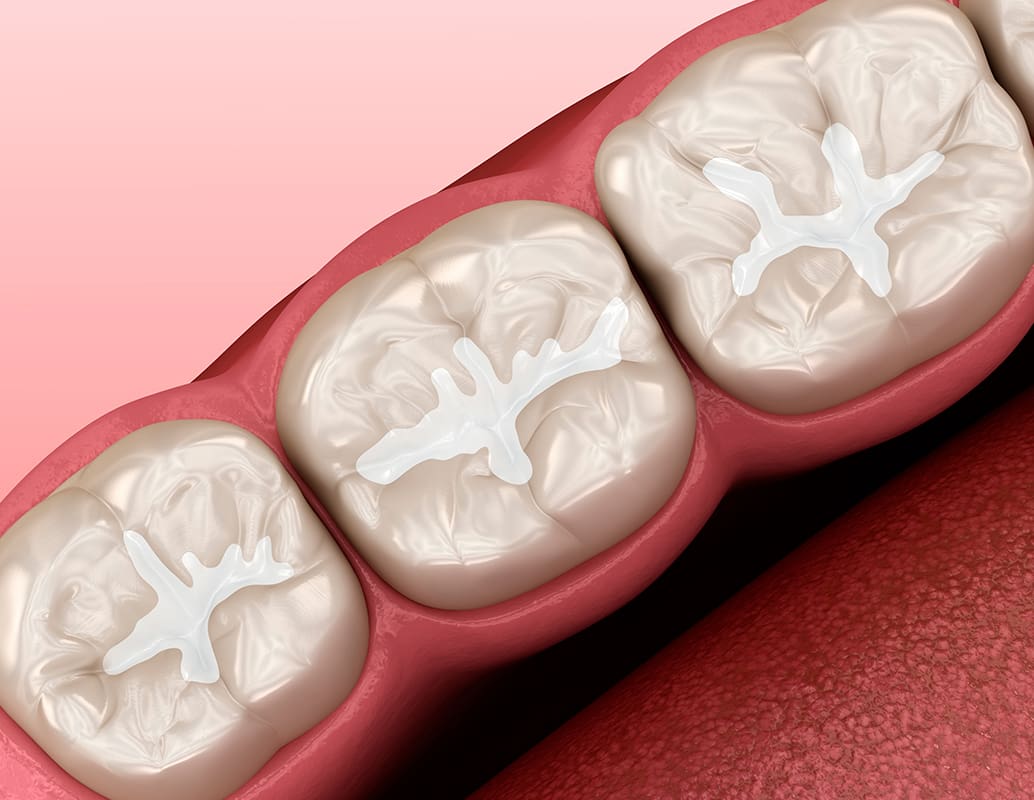
The American Dental Association and The American Academy of Pediatric Dentistry recommend dental sealants for children as a preventive dental treatment.
Sealants are highly effective in reducing the risk of tooth decay, especially on the back teeth where brushing and flossing can be more challenging. Sealants can also be applied to cavities that are in the early stages to halt their progression.
Studies have shown that sealants can reduce the risk of cavities by up to 80% in the first two years after application. 1
We recommend applying sealants as soon as a child’s permanent molars come through, usually between the ages of six and twelve.
Ideally, they should be placed right after the molars have fully erupted to protect them from developing cavities. Sealants can also be applied to primary (baby) teeth if they have deep grooves and pits and are at risk for decay.
The Benefits of Dental Sealants
Dental sealants are a simple and cost-effective way to help protect children’s molars from cavities. They are especially helpful during the years when back teeth can be difficult to clean thoroughly.
Benefits include:
- Protection against cavities: They create a smooth surface that prevents bacteria and food particles from settling into the deep grooves and pits of the teeth, reducing the risk of cavities.
- Painless process: The application is a painless and non-invasive procedure, requiring no drilling or removal of tooth structure.
- Cost-effective: Compared to treating tooth decay and cavities, this is an affordable preventive measure.
- Long-lasting: With proper care and maintenance, the protection can last for many years, supporting your child’s oral health.
- Promotes good oral hygiene: They make it easier to keep the chewing surfaces of the back teeth clean by creating a smooth, easy-to-clean surface.
The Application Process
The process of applying dental sealants is quick, painless, and non-invasive. These are the general steps involved in applying dental sealants when performed at our pediatric dental office.
- Cleaning: The teeth that will receive the sealants are thoroughly cleaned.
- Isolation: The teeth are isolated and kept dry to ensure optimal bonding of the sealant material.
- Etching: The tooth surface is gently roughened using a mild etching solution that is then rinsed off to create an optimal surface for the sealant.
- Bonding Agent: After drying the tooth, a clear liquid bonding agent is applied with a small brush that helps the sealant better adhere to the prepared surface.
- Application: The dental sealant material is carefully painted onto the chewing surfaces of the teeth, covering the deep grooves and pits.
- Curing: A special light is used to harden and set the sealant material.
The entire process takes about 5 minutes per tooth. No drilling or anesthesia is required! Dental sealants last about 5 years and will need to be redone if they wear or chip off.
Caring for Dental Sealants
Sealants help to prevent tooth decay, but they are not a substitute for good oral hygiene. Your child should continue to brush twice a day with fluoride toothpaste and floss daily.
Regular visits to the dentist for check-ups and cleanings are also essential to maintain healthy teeth. During these appointments, we will check the condition of the sealants and reapply them if necessary.
Dental Sealants vs Fluoride Varnish
Both dental sealants and fluoride varnish are preventive measures used to protect teeth from cavities. Here are some key differences between the two:
- Purpose: Dental sealants create a barrier on the chewing surfaces of molars, while fluoride varnish is applied to all tooth surfaces to strengthen and protect against decay.
- Application process: Sealants are bonded to the enamel in the grooves of the teeth, while fluoride varnish is painted onto the surface of the teeth.
- Frequency of application: Dental sealants stay on the teeth and last about 5 years, while fluoride varnish is a treatment that needs to be reapplied every 3–6 months.
- Target age group: Sealants are recommended for children and adolescents with permanent molars, while fluoride varnish is suitable for children and adults of all ages.
Both dental sealants and fluoride varnish help reduce the risk of cavities, but they protect teeth in different ways and are often used together as part of preventive dental care.
Why Preventive Dental Care is Important
Preventive dental care plays an important role in maintaining optimal oral health and preventing dental issues before they become more severe. By taking proactive steps to care for your child’s teeth, you can help them develop healthy dental habits for life.
Regular dental check-ups, proper oral hygiene practices, and preventive measures like dental sealants can significantly reduce the risk of cavities and other dental problems.
Investing in preventive dental care not only saves you money in the long run but also helps your child maintain a healthy and confident smile.
We believe in a proactive approach to dental care, focusing on education and preventive measures to help children maintain healthy smiles for life.
We offer dental sealants as one of our preventive services to protect your child’s teeth from cavities.
Contact us today to schedule an appointment and give your child a healthy smile that will last a lifetime!
FAQs
What are dental sealants made of?
Dental sealants are made of medical-grade resin or glass ionomer materials.
Can you feel them?
No, once the sealant is applied and cured, it becomes a thin layer that is not noticeable to the touch.
Can you see them?
Dental sealants are typically tooth-colored and blend in with the natural teeth, making them virtually invisible.
Are there BPAs in dental sealants?
The material used in some dental sealants contains a small amount of BPA. However, studies show the level is significantly lower than daily exposure from other sources.
How long do you have to wait to eat or drink after they are applied?
You can eat and drink as soon as the sealants are applied and cured.