
Silver Diamine Fluoride
Key Takeaway
Silver diamine fluoride (SDF) is a liquid that when painted on the tooth can stop a small cavity from growing or slow the growth of a medium cavity. It is a great option for treating small cavities on a non- or pre-cooperative child. It is made up of silver, water, fluoride and ammonia.
What Is SDF and How Does It Work?
SDF is a clear liquid made of silver, water, fluoride, and ammonia. When applied to a small or medium cavity, it penetrates the affected area and kills the bacteria responsible for causing decay.
It has been shown to remineralize demineralized dentin, which means it helps restore the affected tooth structure. This results in a stronger and healthier tooth.
SDF is most effective when applied multiple times. It is important to note that if the area is not kept clean or covered with a restorative material, the cavity can return.
Benefits of SDF
Silver diamine fluoride offers several advantages for children who may not tolerate traditional cavity treatment well. Because it is fast and non-invasive, it can help manage decay while avoiding drilling or numbing in certain situations.
Benefits include:
- Controls pain and infection
- Quick and painless application
- Requires no drilling or numbing
- Low cost compared to traditional treatments
- Non-invasive method of cavity treatment
- Desensitizer for hypoplastic molars
Potential Downsides
While SDF has many benefits, there are some potential downsides to consider. These include:
- Unpleasant metallic taste reported by some patients
- May cause irritation to gum and mucosal surfaces
- Leaves a black scar on treated teeth
However, the effectiveness of this treatment far outweighs these minor side effects.
Application Process
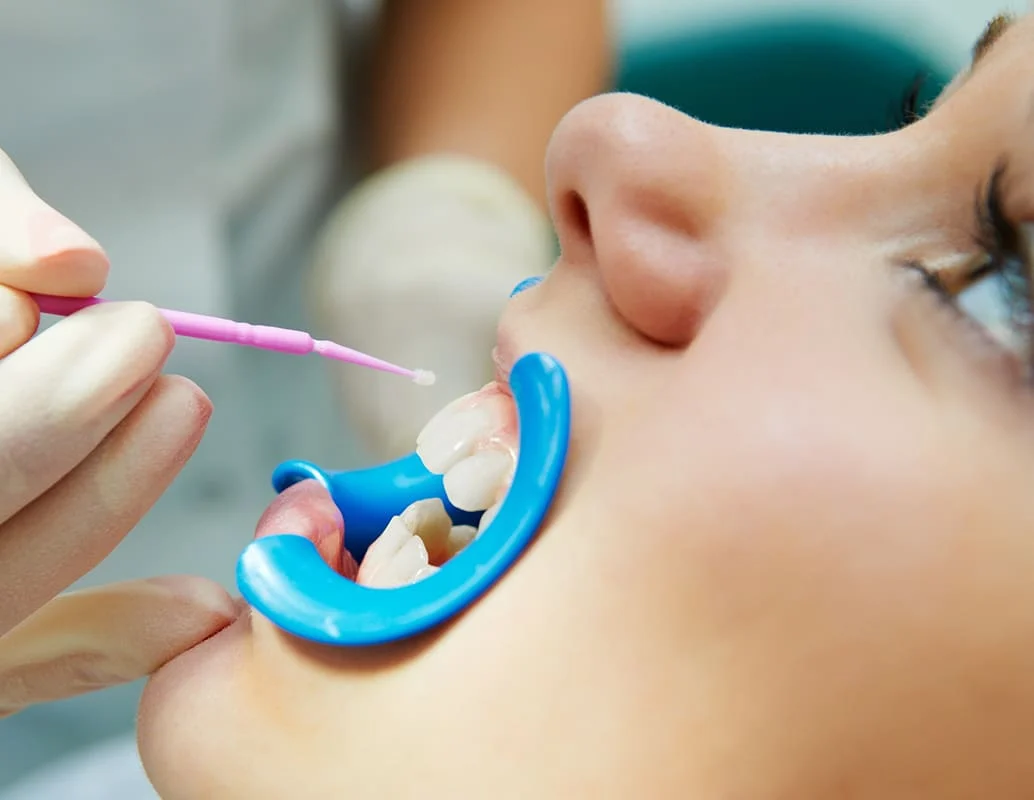
The application of SDF is quick and painless.
- First, the tooth is dried with air, then the liquid is applied with a small brush or special floss for cavities in between teeth.
- A fluoride varnish is painted over the treated area to seal it in and prevent any further decay. The treatment takes less than 90 seconds per treatment area!
- After the treatment, we immediately give the patient a sugar-free sucker to mask the unpleasant taste.
Did You Know…
Dental caries continue to be the most prevalent chronic disease affecting children in the United States. According to a 2024 survey performed by the CDC, more than 1 in 10 children aged 2–5 years had at least one untreated cavity in their baby teeth. By age 6–8 years, it was nearly 1 in 5 children.
How is Regular Fluoride Different from SDF?
While both fluoride and silver diamine fluoride are used to prevent and treat dental decay, they serve different purposes and are used in different ways.
Regular fluoride primarily acts as a preventive measure to strengthen enamel and reverse early decay, whereas SDF is used to arrest existing cavities without extensive dental work.
SDF also has the additional component of silver, which provides antibacterial properties, and unlike regular fluoride, it leaves a characteristic black stain on treated teeth.
Regular fluoride treatments are typically non-invasive and leave no visible mark on teeth, making them suitable for regular maintenance in dental care.
We offer a range of dental treatments and preventive measures to ensure your child’s teeth are strong, healthy, and cavity-free.
We also prescribe and dispense prescription strength fluoride toothpaste when appropriate.
Contact us today to schedule an appointment and give your child a healthy smile that will last a lifetime!
FAQs
What are the downsides of silver diamine fluoride?
The potential downsides of SDF include an unpleasant metallic taste for some patients, possible irritation to gum and mucosal surfaces, and a black scar on treated teeth. However, these are minor side effects compared to the benefits of using SDF as a non-invasive treatment option for cavities.
Is SDF better than a filling?
It ultimately depends on the individual case and the recommendation of your dentist. In some cases, a traditional filling may be necessary if the cavity is too large or deep for SDF to effectively treat. However, SDF can be an excellent alternative for smaller cavities or to slow the growth of medium-sized cavities.
How much does SDF cost in Kansas?
The cost of SDF treatment can vary, depending on the location and dental office. In Kansas, the average price for a single application of SDF ranges from $50 to $100 per tooth. However, this is typically less expensive than traditional fillings or other invasive dental procedures.